Book Review: Hinges

Book Review: Hinges

This book is a collaboration between three individuals, one of which sadly passed away in an accident in the final stages of the book. It is evident that these three men all have a passion for reaching the lost. Together they formed a consulting service called the Transforming Congregations Network (TCN) with the desire to “transform” and “revitalize” congregations in such a way that everything congregations and pastors do—from weekly worship to congregational events, daily life, preaching and teaching—is centered on reaching out to the lost (unbelievers). The foundation of their efforts is clearly laid out from the beginning.

Read More

2017 Bjarne W. Teigen Reformation Lectures

2017 Bjarne W. Teigen Reformation Lectures

The annual Bjarne W. Teigen Reformation Lectures will be held October 26–27, 2017 at Bethany Lutheran College in Mankato, Minnesota. This year the theme will be Luther’s Three Treatises: The Reformation Platform. These lectures delve into the Reformation heritage with presentations on the history and theology of the Lutheran Reformation with application to the teaching and practice in the Lutheran church today.

Read More

Book Review: The Necessary Distinction

Book Review: The Necessary Distinction

Most pastors are bibliophiles but also busy and so can appreciate the clever (if a bit macabre) Internet meme that says, “I’ll probably die next to a stack of books I was meaning to read.” Don’t let this book stay on that stack. As the fruit of “ongoing discussions” (p. 9) among pastors and theologians from three Lutheran church bodies, The Necessary Distinction means to be the first course of its subtitle: a continuing conversation.

Read More

Confirmation: When? Early? Later, or not at all?

Confirmation: When? Early? Later, or not at all?

Abstract: This essay sets forth the Reformation pattern for admission to the Lord’s Supper – baptism, instruction, admission to the Lord’s Table. Age was not a factor in this historic practice. Modern changes have moved toward early communion before full instruction and confirmation. All three major Lutheran hymnals in the US have orders for the rite of first communion before full instruction and confirmation. Early communion was followed by a strong push for infant communion since the Eucharist is the birthright of the baptized.

Read More

TBT: Kilcrease Discusses Forde

TBT: Kilcrease Discusses Forde

Current discussions in confessing Lutheranism involve the teachings of Gerhard Forde. In this article from the 2012 Epiphany Issue of LOGIA Journal, Dr. Kilcrease examines Forde's theology. He provides both a positive assertion of some elements of Forde's theology and a critique of his weaknesses.

Read More

A Response to Woodford

A Response to Woodford

Last week LOGIA Online posted an article by Pastor Lucas Woodford entitled “Third Use of the Law and Sanctification.” He offered a descriptive analysis of a “debate going among conservative confessional Lutheran circles regarding the nature and use of the Law, particularly its Third Use, as well as the issue of antinomianism and the sanctified life under the Gospel.”

Read More

Book Review: Confessing the Scriptural Christ against Modern Idolatry

Book Review: Confessing the Scriptural Christ against Modern Idolatry

The Rev. Philip Hale, pastor at Zion West Lutheran Church, Omaha, NE, takes on a problem that may suggest itself to anyone keeping up with exegetical theology produced in the Lutheran Church—Missouri Synod at present, and that is—for want of a better way of putting it—turning the Gospel into a wax nose of the exegete’s own making (see pages 208, 211).

Read More

Book Review: Lex Aeterna

Book Review: Lex Aeterna

In Lex Aeterna, Jordan Cooper strives to defend the scholastic view of the eternal law and a positive use of the law. He seeks to do so over against what he perceives to be Gerhard Forde’s view of the law and its place in Christian preaching and the Christian life. Cooper writes well and accessibly. The book has exceptional flow and is clearly organized.

Read More

Reformation Reading by Pless

Reformation Reading by Pless

A number of pastors have asked me for suggestions for recent books on Luther as we are now into the 500th anniversary of the Reformation. What follows are my suggestions for books that would be valuable in a congregational library and for reading by interested laity. Several of these books would serve well as the basis for an adult Christian education class. Those marked with an * fit that category.

Read More

SYNODICAL TREASURES

SYNODICAL TREASURES

During the January 2017 Symposia week at the Fort Wayne seminary, I had the opportunity to not only hear many excellent lectures, but also to renew many friendships with people in my synod—The Lutheran Church—Missouri Synod (hereafter LCMS)—and in other Lutheran synods here in North America and around the world.

Read More

Book Review: Biblical Authority after Babel

Book Review: Biblical Authority after Babel

The “solas” are at the forefront, appropriately so, of a lot of Reformation jubilee discussion and literature as October 31, 2017 approaches. Because they can be seen as providing a content-rich but extremely compact summary of the Reformation movement, Reformation teaching, or of the motivations of the Reformers, even the fact that they’re in Latin is overlooked. I myself find, as I pastor in a setting where Lutherans are one of the rarer breeds of Christianity, that a short reference to sola gratia,sola fide, and sola scriptura can go a long way, not only to describe who we are, but also to garner some respect among those who otherwise suspect me of having a shrine to Martin Luther in my house.

Read More

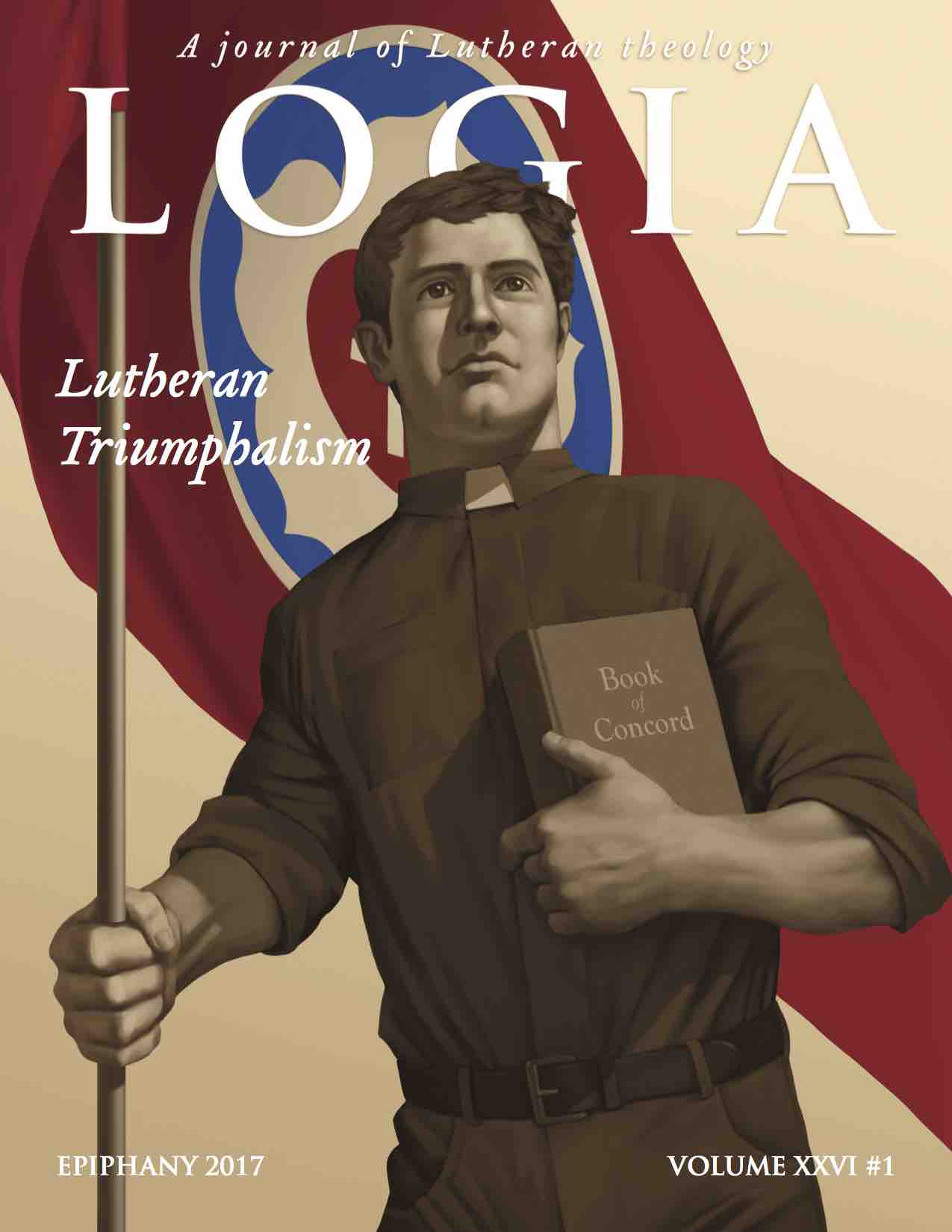
Issue 26-1: Lutheran Triumphalism

Issue 26-1: Lutheran Triumphalism

According to a quotation making the rounds recently, “Success without decency is a hollow victory”—or perhaps a “hollow triumph”? The articles in this issue provide valuable insights as to the nature of Lutheran triumphalism, its relative decency, and its contemporary relevance, especially in light of the forthcoming Reformation 500 observances.

Read More

A Word about the Cover

The anniversary of the Reformation in 2017 is a big year for Luther and Lutherans. All kinds of Reformation celebrations are being planned, and many are already underway. Perhaps what will be lost in the celebrations is Luther's own emphasis on humility. Some of the last words from his pen said that "we are all beggars," a final reiteration of his point that it is God who works good in his church through his word. Man is merely the instrument through whom God works, and Luther would remind us that this calls for a healthy dose of humility.

Read More

BOOK REVIEW: Being Dad

BOOK REVIEW: Being Dad

Much ink has been spilled over the subject of Christian parenting, especially the vocation of “father.” The critique of modern Western society that the role of father has been degraded to the point that we no longer recognize the true purpose or value of having a father is more than accurate. Doubtless this is a contributing factor to the Western acceptance of the equivalence of mother and father or much worse the irrelevance of the father. Yet many recognize the need of some sort of father-like figure—certainly all the super-villains and heroes in the movies having “daddy issues” is no coincidence. So what is a father? Is he necessary? What does he look like? What does he do?

Read More

Not the Same

Not the Same

EXCERPT: In other words, the U.S. Supreme Court, its allied judges, and its like-minded politicians are engendering the American republican-democratic state into establishing or into becoming the state Church of Neopaganism in the USA with the Supreme Court Justices in majority ruling as its self-ordained high priests.

Read More

The Ministry of a New Covenant

The Ministry of the New Covenant

Text: II Corinthians 3:4-6

— by John T. Pless

Editor’s Note: The Rev. John T. Pless preached this sermon for the ordination of Michael Daniels on Trinity XI (August 7, 2016) at Salem Lutheran Church, Taylorsville, NC.

 This past month in Cleveland and then in Philadelphia, the attention of our nation and even the world was turned to decisions being made by the two leading political parties as to who would be put forward as their respective candidates for president of the United States. There were stirring speeches and rhetorical appeals. Those gatherings captured media coverage and commentary, and no doubt the dust will not settle until the election takes place in November. 

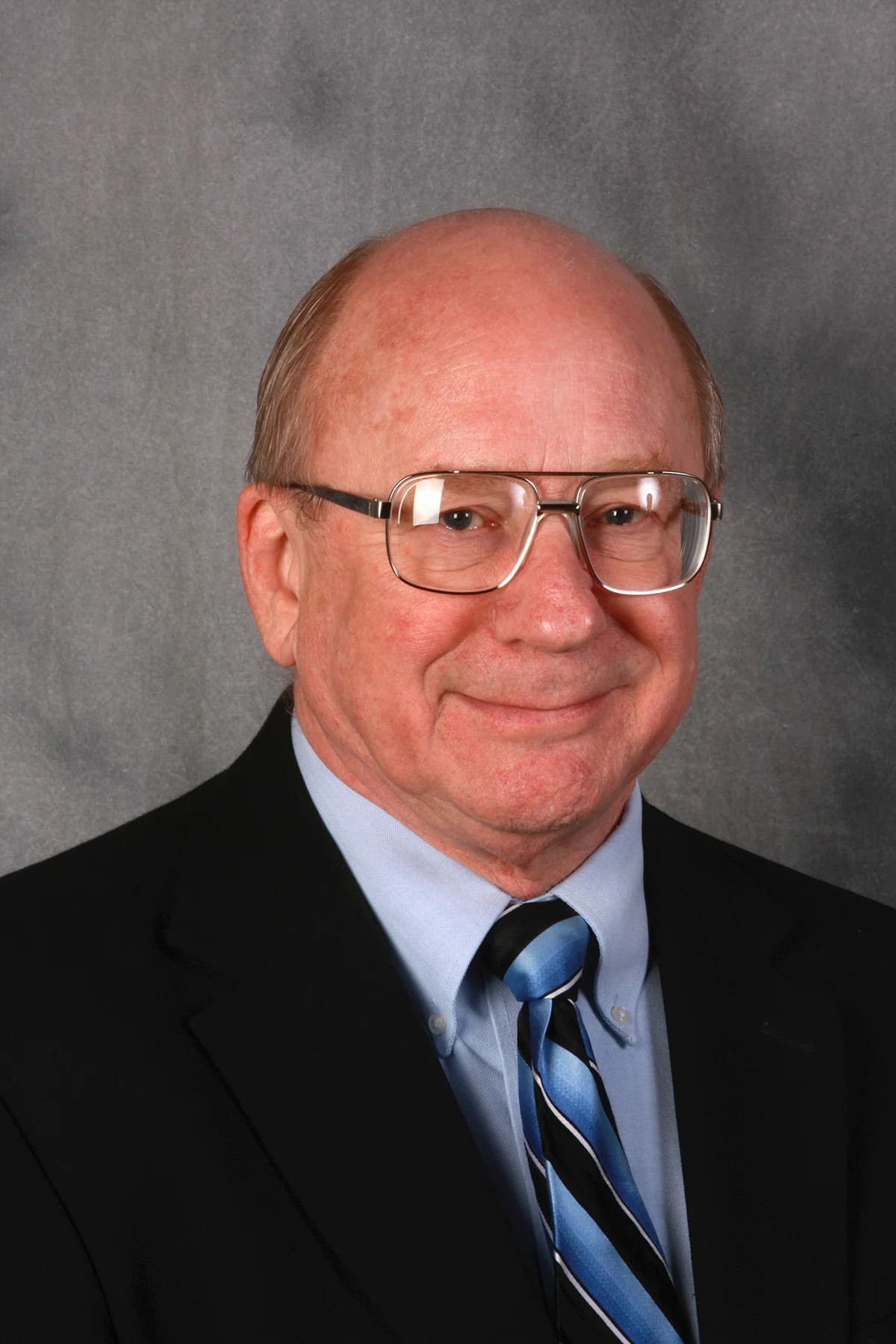
Prof. John T. Pless

Prof. John T. Pless

By way of contrast, we are gathered here this afternoon not to put forward a man for political office with all the ruckus of a convention. Instead, we are here on this lazy August afternoon because Christ Jesus is putting a man in a spiritual office, the office of preaching, the office of the holy ministry of Word and Sacraments. This is not an office of worldly authority, but it is an authority for it is the office of the Spirit, the Lord and Giver of Life. So Dr. Luther says in one of his many sermons of John 20: “This was not Christ’s mandate to His disciples, and He did not send them forth for secular government. Rather, He committed to them the preaching office, and the government over sin, so that the proper definition of the office of preaching is that one should preach the Gospel of Christ and forgive the sins of the crushed, fearful consciences, but retain those of the impenitent and secure, and bind them” (LW 69:383). 

That is the office, Michael, into which you are placed today. The media might yawn at a church service which seems so pale and insignificant when set alongside the commotion of a convention hall, but I would submit to you that what is taking place today will have a significance — yes an eternal significance — long after the names of Donald Trump and Hillary Clinton are forgotten (and for that matter, even your own name is no longer remembered). The kingdoms of men and nations rise up and pass away, but the Word of the Lord endures forever. It is an everlasting Gospel, this word of the cross, which you, Michael, are ordained, that is, put under orders to proclaim.

The person who is put into the office of president has weighty responsibility on their shoulders. The man who is put into the office of preaching has an even heavier burden to bear. Presidents and prime ministers, kings and emperors are given charge over things temporal. Pastors exercise an office with eternal consequences as they are charged to forgive the sins of the broken and retain the sins of the self-righteous, those who in their fleshly security refuse to repent.

The Rev. Michael Daniels and his wife, Emily

The Rev. Michael Daniels and his wife, Emily

Political candidates recommend themselves for secular offices even as they seek to the approval and recommendation of others. But who can recommend himself for the office of preaching? As he writes II Corinthians, Paul does not commend himself, but Christ Jesus. So also with this young man, this son of Salem congregation, who is ordained today; it is finally not about Michael but about Jesus. 

Certainly, there is much to celebrate and give thanks for this afternoon. It is fitting that the congregation has a godly pride in the fact that one of your own, taught the Holy Scriptures and the Catechism in your midst, nurtured in the fear, love, and trust in God above all things, confirmed in the faith at this altar and fed here with the body and blood of Christ has been led to prepare for the pastoral office. On behalf of the whole church, I speak a word of thanksgiving for the gift that you have given in providing Michael for the work of the ministry. It is good and right that his parents and family who have supported and encourage him at each step along the way, now rejoice that Michael has come to this day. And Michael and Emily are no doubt relieved that the rigors of seminary education are in the rear view mirror and a big bright Texas-size future awaits them. There is eagerness and excitement now to get on to the work which you have been preparing for these past years. That is all well and good, but there is more. There is the one thing which you are to know and never forget. It is this: Jesus Christ, crucified and raised from the dead is alone your sufficiency for preaching office.

The Rev. Chris Hull, senior pastor at Zion Lutheran Church, Tomball, TX

The Rev. Chris Hull, senior pastor at Zion Lutheran Church, Tomball, TX

Your confidence is finally not that you have a Master of Divinity degree from Concordia Theological Seminary, or that you have the set of skills required for effective ministry, or that Zion Lutheran Church in Tomball, Texas thinks that you will be a good fit to work with Pastor Hull. All of that may be helpful but you have something greater. The Apostle puts it like this: “Such is the confidence that we have through Christ toward God.” In a few minutes, Michael, you will make some God-sized vows, solemn promises that your teaching will be completely bound to the Holy Scriptures and the Lutheran Confessions and that your life will adorn and reflect the doctrine of Christ you are sworn to deliver in season and out of season. These vows should cause you to tremble more than a little. You can finally give a full-throated and unqualified “yes” to these questions because your confidence is toward God through Christ.

That little phrase that Paul uses “through Christ” is the key. Paul’s ministry was not validated by his cleverness or perseverance, by his eloquence or appearance, by his credentials of heritage or education but only through Christ. So it is with you, Michael. You are sufficient for this work only because your sufficiency is from God through Christ. 

He has made you competent to be a minister of the new covenant. The prophet Jeremiah spoke of the new covenant that God would make with His people. The old covenant made at Sinai was shattered by Israel’s sin. There is no salvation there. The Law can only curb and condemn sin; it is powerless to forgive sin. Instead, Jeremiah proclaims a new covenant. That new covenant contains a promise absent in the old covenant. And the promise is this says Jeremiah: “ I will forgive their iniquity, and I will remember their sin no more” (Jer. 31:34).

You are a minister not of the letter that kills (that’s the Law) but of the Spirit who gives life (that’s the Gospel). Yes, you will preach the Law in all of its sternness to those who are hardened in their unbelief but that preaching will never take their sin away. You will preach the Law only so your hearers might come to hear the promise of the new covenant: “ I will forgive their iniquity, and I will remember their sin no more.” The letter kills, the Spirit gives life. The law never finds righteousness, and it is powerless to create it. The Gospel only finds sinners, but it is the power of God for salvation for it bestows righteousness in the forgiveness of sins for the sake of Christ.

You, Michael, are today authorized to be an agent and ambassador of the new covenant, on your lips are the words of Jesus, the Lamb of God who takes way the sin of the world. His words are spirit and life (John 6:63). Your competence and your confidence are in them. Move away from Jesus’ words, start referencing yourself, proclaiming something other than the Law and Gospel or mixing and muddling the two, and then you will have neither competence nor confidence. For this reason, your confession like that of the disciples can only and ever be: “Lord, to whom shall we go? You have the words of eternal life.” 

Preach the Law? Yes, for it is necessary to bring secure sinners to repentance. Afflict those who are comfortable in and with their sin. To those who have been so afflicted, preach the comfort of Jesus Christ who atoned for the sins of the world and by His resurrection gives forgiveness of sins to all you will receive it. That is the work of the minister of the new covenant. Today, Michael, it is the work committed to you.

Christ Jesus is sending you on your way today as a minister of the new covenant, not the letter that kills but the Spirit who gives life. You cannot see the ending of the path set before you. The Lord who sends you does not promise that the journey on which you are now embarking will be an easy one. This culture of death into which you are sent despises Christ. The ever-deceiving world, your own stubborn flesh, and the clever devil will always be on the attack. But you have a promise that is guaranteed by the Lord Jesus Christ who has been raised from the dead never to die again. This is the lively and life-giving hope which will not disappoint you. In Him your life and work are secure for in this Jesus your sufficiency is from God. He has made you competent to be a minister of the new covenant, not the letter that kills but the Spirit who gives life. You have His promise. That is enough. Amen. 


Prof. John T. Pless is assistant professor of pastoral ministry and missions at Concordia Theological Seminary, Fort Wayne, Indiana.


As an extension of LOGIA, LOGIA Online understands itself to be a free conference in the blogosphere. As such, the views expressed here are those of the author and do not necessarily reflect the views of LOGIA’s editorial board or the Luther Academy.


Book Review: Praying Luther’s Small Catechism

Praying Luther’s Small Catechism. By John T. Pless. Concordia Publishing House, 2016. 182 pages. Paperback. $8.99

In a day and age where there is a great famine of God’s Word and a culture beset on removing all voices of a distinctly Christian worldview, Pless’s Praying Luther’s Small Catechism must find a space on your bookshelf. In the preface, Pless sets the tone that there is always more to learn and receive in this exemplary reformational and catechetical text. “Readers will be drawn into a deeper and lasting appreciation of this handbook for doctrine, vocation, and prayer. It is especially desired that your own praying of the catechism will be enlivened and enlarged” (ix).

Chapter 1 begins by emphasizing that Luther’s Catechism is more than an adolescent text used for a short period of instruction. It is a book to be prayed and digested for a lifetime, confessed before the world, and uttered incessantly against the devil. These simple words, Pless says, “are not too difficult for the young pupil yet they contain abyssal mysteries into which the mature Christian sinks” (2).

Chapter 2 is devoted to the Ten Commandments. The Law is inscribed upon creation. The voice of prayer lies in every throat. The question however, as Pless aptly points out, is to what god are your prayers addressed? Is it a voice searching and hoping that a divine ear will hear? Or is it the voice of faith that our heavenly Father always listens to with joy and thanksgiving? Drawing on Luther’s “Simple Way to Pray,” Pless shows the reader how to pray through the formula of instruction, thanksgiving, Confession, and prayer. This formula helps the reader to see that Luther’s Small Catechism is not just one book, but a “school text, song book, penitential book, and prayer book” (16).

Chapter 3 turns to the Apostles’ Creed. The Creed instructs the Christian over what kind of God he has, what He has done, and what He will do, for God has bound Himself graciously to His own promise and gift of creating, redeeming, and sanctifying the sinful creature. Drawing upon Oswald Bayer, Pless concretely expresses the reality of the relationship of faith, giver, gift, and response, showing the reader how he should rightly confess, pray, and give thanks to God for such marvelous gifts. Pless helps the reader to see how Luther understood everything which is contained in the Creed is pure gift, “without any merit or worthiness in me.” “Luther’s whole exposition of the Creed proceeds in terms of divine giving” (50). 

Pless then turns his attention to the Lord’s Prayer. The Lord’s Prayer is the prayer that governs all Christian prayer. Not only is it our Father’s words, but they are words placed into the mouth of the Christian that he might pray aright, according to the will and desire of his heavenly Father. Pless shows how the first three chief parts of the Small Catechism come together in command, promise, and petition. Not to be missed in this chapter is how Pless cuts through every false theology of prayer, demonstrating that all prayer is prayed under the crucible of the cross: “The Lord’s Prayer is a cry wrung from the crucible, an exposition of the shape of life lived under the sign of the cross in the hope of the resurrection” (53).

After the Lord’s Prayer, Pless moves to consider Baptism. In order to pray in God’s Name, one must first be given His Name, and that is precisely what God gives in baptism. The instituting words are the gift and the gift is embedded in the words. In baptism God is not out to make religious people, but rather He creates new creations by water and Word. Pless seeks to reclaim the understanding of the present tense reality of baptism. Baptism is not an empty religious ritual, an invisible force field that protects the sinful man by the mere performance of the rite. Rather the Christian hears in the word spoken a new reality being declared. “Baptism works for the forgiveness of sins, and as such it brings about a change of lords. Sin is no longer lord. Jesus is” (83). The sinful creature is now a new born creature, water and Word, promise and gift, all at work by the Triune God, giving sinful creatures new born names by which they petition and plea for grace and mercy to the open ears of their Father.

In chapter 6 Pless moves to Confession, Absolution, and the Office of the Keys. Confession is not merely good for the soul, it is the soul’s mercy and life. While giving the historical background of the insertion of this chief part into the Small Catechism, Pless argues that “Luther certainly didn’t want to jettison the practice of individual confession, but filter it through evangelical sieve of justification by faith alone, so that purified from its Roman abuses it might be restored as a means of consolation for those terrified by their sin” (96). Far from a father confessor’s tool to extract tidbits of information, confession is retained for the sake of the absolution, for those well worn by their sins and in need of rescue and respite from the old wicked foe. Burdened consciences need a place where they are not turned inward, but outward to an external Word that pronounces Christ’s forgiveness apart from the internal struggles that haunt them. That outward Word, “Your sins are forgiven,” is the “word which opens the heart and unlocks the lips for prayer, praise, and thanksgiving” (107).

From Confession and Absolution Pless turns to the Sacrament of the Altar. Pless underscores that with the Sacrament of the Altarthe gift must not be confused with thanksgiving. Thanksgiving does not result in gift, but gift always results in thanksgiving. Thanksgiving is not removed from the life of the Christian, but simply relocated, as in the post-communion collect that orders faith and love in their proper spheres. Pless observes that Luther sought to ensure that “Christians know what the Sacrament is, its benefits, and how it is to be used in faith” (110). Pless reminds readers that at time of the Reformation Luther was fighting a battle on two fronts. First against the Roman Catholics who turned the Sacrament into a work of merit; second, against the Sacramentarians who divested Christ’s body of its corporeal presence. Pless demonstrates how Luther was able to confess both the sole divine gift of this Sacrament alongside the true presence of Christ’s body and blood that gave enfleshed comfort to weak and dying sinners. For Pless, as for Luther, Christ’s words are key for “Christ’s words bestow what they promise” (113).

Chapter 8 is devoted to daily Christian prayer. From morning to night, from abundance to scarcity the Christianis a beggar that pray for daily and eternal bread. It is from one’s creatureliness that he pray. “The heavenly Father is to be praised and thanked precisely at those junctures in daily life where it is most clear that we are creatures: when we wake from sleep and again when we take our rest, as well as at mealtimes, when we receive nourishment for our bodies” (120). We always pray as creatures, always dependent upon our heavenly Father’s hand to satisfy the desires of our bodies and souls. In the home, the table of meat and drink become a table of gifts, a little altar where we creatures give thanks that our heavenly Father has given such sustenance out of His pure and divinely gifted hand. Here the Divine Service is “transported into the everyday space of the family dining room” (125).

Pless concludes by considering the Catechism’s Table of Duties. Here Pless instructs the reader in the three estates that God instituted, congregation, civil government, and the family. The Table of Duties are informed by these estates that the Christians inhabits in faith. They are the orders that restrain sin, that allow for life to increase, and provide peace and safety so that the gospel may be preached for the joy and edification of God’s holy people, and that the church be enlarged through this proclamation. Pless notes that Luther spoke often of these three estates, especially in his magisterial work, “Confession Concerning Christ’s Supper.” Here Luther shows that faith is not bound to any one estate but is found in all three. Pless does warn that none of these estates “are paths to righteousness before God . . . they are concrete locations where faith is active in love for the well-being of the neighbor” (128). The various vocations of the Christian lead him to see and act in love for those who are entrusted into his care. He is a slave of love to his neighbor, and yet because of Christ and His gifts, he is lord of all, subject to none, a citizen of heaven. 

Pless’s text is a gem in the church’s work of catechesis. Against the failures of generations fixated upon themselves, and a disintegration of culture, Praying Luther’s Small Catechism will aid all children of God, no matter their station in life, to receive and teach the language of Christ’s church and to confess her Lord’s will that all come to Him, the sole author of grace and mercy, forgiveness and eternal life. In these difficult and perilous days this book that will aid the Christian mightily, not only teaching him how to pray, but how to live in the world according to the heavenly Father’s good pleasure. Most assuredly, this book will teach the Christian how to receive the Father’s gifts through the Son and by the Holy Spirit. Every Lutheran should have a copy of this book. And its pages should be well worn. 


Christopher L. Raffa

Pilgrim Evangelical Lutheran Church

West Bend, WI